
Hampton County Criminal Court Records
A Hampton County criminal court record is the court case file created after an accusation moves into the judicial system. In General Sessions, Clerk of Court Jvonndra Brooks-Creech's office accepts and maintains criminal warrants, transmits warrant information to the 14th Circuit Solicitor for indictment preparation, collects bail and bond fees, prepares court-term material, and updates the court file after disposition. That file is separate from the initial arrest or custody record.
South Carolina uses Circuit Court for major trial-court criminal cases. Hampton County is in the 14th Judicial Circuit, and the criminal side of Circuit Court is General Sessions. Magistrate Court and Municipal Court handle qualifying lower-level criminal, traffic, bond, preliminary-hearing, warrant, and ordinance matters. The full criminal case file and outcome belong here; the specific arrest-to-charge path is handled in Hampton County court charge records.
The expungement overview source image comes from the South Carolina Judicial Branch expungement process.
Expungement matters because a criminal court record can be public at one stage and later sealed or destroyed if South Carolina law allows it.
Search Hampton County Criminal Court Records
Use the Hampton Public Index through the county Public Records page or the South Carolina Judicial Branch case-records directory for public case lookup. The Hampton County Public Records page, General Sessions Court page, and Clerk of Court page are the county-specific starting points before paid copy requests. The Judicial Branch directory identifies Hampton County as Circuit 14, County 25. The public index may require cookies, JavaScript, and pop-up access. If a record does not appear, use the Clerk for Circuit Court files, the Magistrate Court for summary criminal matters, or the municipal court for town ordinance and local qualifying offenses.
- Open the Hampton Public Index from an official Hampton County or South Carolina Judicial Branch link.
- Search with a defendant name, case number, indictment number, or court level if those options appear in the browser.
- Check whether the case is General Sessions, Magistrate Court, Municipal Court, or another court type.
- Read the docket for charges, hearings, plea entries, disposition, fines, fees, and sentencing clues.
- Request certified copies from the Clerk of Court or the proper lower court when an official paper copy is needed.
State-level criminal history searches are different from court case searches. SLED CATCH is a paid name-based South Carolina criminal-history check, while Hampton County court records show the case activity held by the court. The broader Hampton County court records path covers civil, family, probate, appellate, and other court records.
The General Sessions expungement image source is the SC Judicial Branch General Sessions expungement page.
General Sessions is the key criminal court level for Hampton County felony case records and related expungement routing.
Hampton County Criminal Case Flow
Criminal court records build in stages. A warrant or charging document may start the path, but the court case record grows as the defendant appears, motions are filed, a plea or trial occurs, and the court enters a disposition and sentence. The Solicitor's Office is central to General Sessions cases because South Carolina uses solicitors as prosecutors.
Case flow: Charges Filed › Arraignment › Pretrial and Motions › Plea or Trial › Disposition › Sentencing
| Stage | What Happens |
|---|---|
| Charges filed | A warrant, indictment, or other charging record starts the criminal case path. |
| Arraignment | The defendant is formally advised of charges and enters an initial response under court procedure. |
| Pretrial and motions | Attorneys file requests, bond issues may be reviewed, and hearings are scheduled. |
| Plea or trial | The case is resolved by plea, bench or jury trial, dismissal, or another court-approved action. |
| Disposition | The court records the outcome, such as guilty, not guilty, dismissed, nolle prossed, or other result. |
| Sentencing | After conviction or plea, the record may show fines, fees, jail, prison, probation, or other sentence terms. |
The juvenile expungement source image is the SC Judicial Branch juvenile records expungement page.
Juvenile matters require special handling because South Carolina law treats juvenile court records as confidential, with access tied to court authority.
What Hampton Criminal Court Records Show
Hampton County criminal court records can contain both charge information and case outcome information. The research specifically notes warrants received by the Clerk, solicitor transmission records, indictment numbers, bail or bond money, public defender applications and fees, court-term preparation, dispositions, fines, fees, and updates after disposition.
| Field | What It Shows |
|---|---|
| Defendant name | The person charged in the criminal case, subject to redaction or confidentiality rules. |
| Warrant or indictment | The warrant received by the Clerk or indictment number prepared through the Solicitor process. |
| Charges | The offenses alleged by the state, including later changes, reductions, or dismissals when recorded. |
| Bond or bail activity | Money, conditions, or fee records tied to release pending court. |
| Public defender activity | Application records and fees when the defendant seeks appointed counsel. |
| Plea or trial result | Whether the matter ended by plea, trial verdict, dismissal, or other court action. |
| Disposition and sentence | The outcome and any fine, fee, probation, custody, or other sentence imposed after conviction or plea. |
The Magistrate and Municipal Court expungement source image is the SC Judicial Branch summary-court expungement page.
Summary-court criminal records may follow different expungement procedures than General Sessions records, especially for not-guilty, dismissed, or nolle prossed cases.
Charges vs. Convictions
A criminal charge is an accusation. A conviction is an outcome after a guilty plea, guilty verdict, or other conviction-producing court result. Hampton County criminal court records may show charges that were amended, reduced, dismissed, nolle prossed, or resolved without a conviction. Reading the disposition is essential before treating a charge as a final result.
| Charge | Conviction | |
|---|---|---|
| Case stage | Filed near the start of the case or added later. | Entered after plea, verdict, or qualifying court finding. |
| Meaning | The state alleges an offense. | The court record shows guilt was established or admitted. |
| Docket reading | May appear even if later dismissed or reduced. | Should be tied to disposition and sentence fields. |
| Public access | Often public while pending, unless sealed or confidential. | Often public unless later sealed, expunged, or restricted by law. |
Read Dispositions and Sentences
The disposition is the outcome of a charge or case. Hampton County General Sessions records may include the disposition after the Clerk updates the appropriate court file. Common terms include dismissed, nolle prossed, guilty, not guilty, plea, sentence, and probation. A nolle prossed entry means the prosecutor dismissed or chose not to pursue the charge.
Sentencing details can be separate from the charge line. A sentence may involve fines, fees, custody, probation, or other court conditions. Public defender application activity and fee records can also appear in the broader criminal case file. Public Defender contacts matter when a defendant needs counsel rather than a record copy.
The source image for court alternatives comes from the 14th Circuit Solicitor court alternatives page.
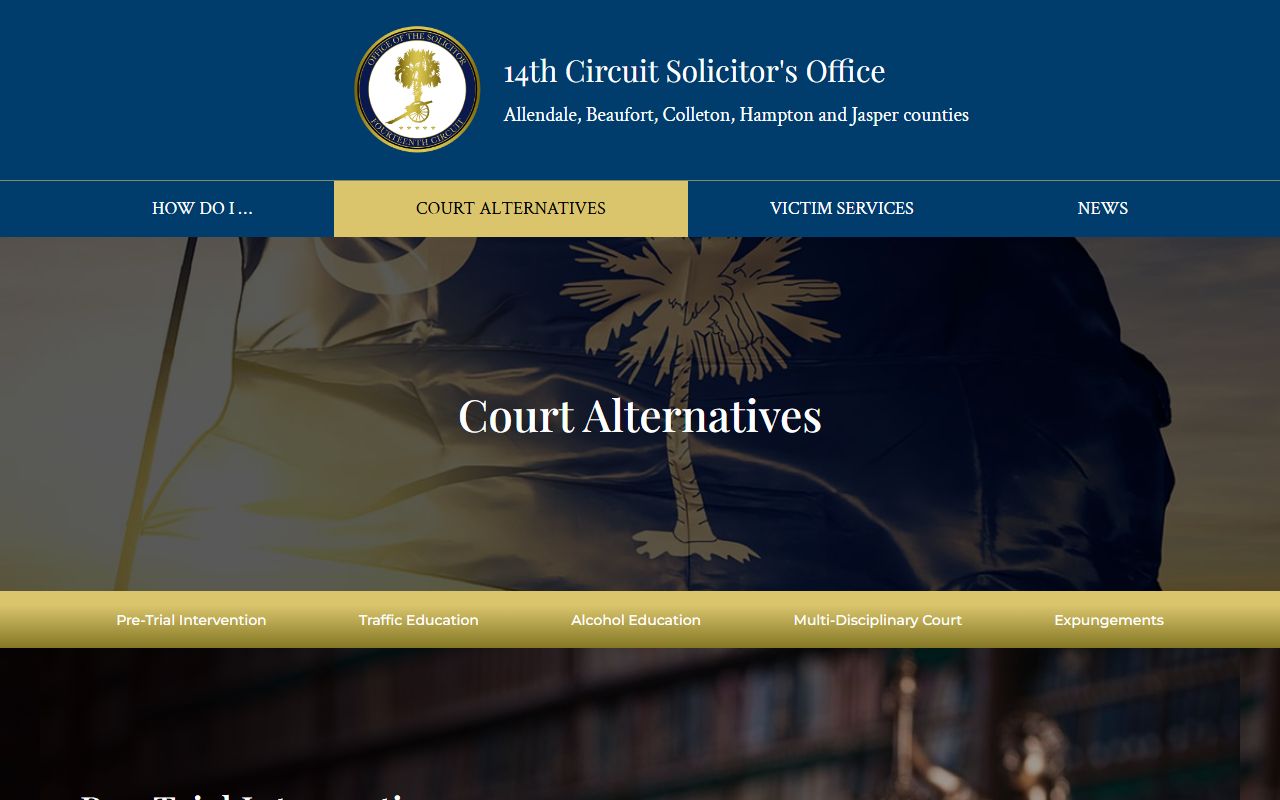
Diversion and court-alternative programs can affect how a criminal case moves, especially when completion may lead to dismissal or later expungement eligibility.
Sealed vs. Expunged Records
Sealed and expunged records are restricted in different ways. Sealing hides a record from ordinary public access, often because a statute, rule, or court order controls inspection. Expungement removes, seals, or destroys eligible criminal records of an arrest, charge, or conviction under South Carolina procedure. General Sessions and juvenile expungement applications start with the Solicitor in the circuit where the offense occurred.
| Sealed | Expunged | |
|---|---|---|
| Public visibility | Not available to routine public inspection. | Removed, sealed, or destroyed for eligible records. |
| Authority | Court order, court rule, or statute. | South Carolina expungement law and court order. |
| Examples | Sealed civil records, confidential Family Court records, juvenile restrictions. | Eligible dismissed, nolle prossed, not-guilty, juvenile, or qualifying criminal records. |
| Local route | Inspection may require special permission or a judge's order. | General Sessions applications route through the 14th Circuit Solicitor before filing with the Clerk. |
Access to Criminal Court Records
Public access to Hampton County criminal court records begins with the public index, but open access is not unlimited. South Carolina FOIA supports public-record access, while court rules and statutes restrict sealed, expunged, juvenile, adoption, abuse and neglect, and personal-identifier information. Rule 41.2 requires redaction of certain sensitive data in court filings.
Key access point: Public criminal case lookup can show case status, but certified copies and sealed-record questions belong with the court office.
The public defender source image comes from the South Carolina Commission on Indigent Defense circuit public defender directory.
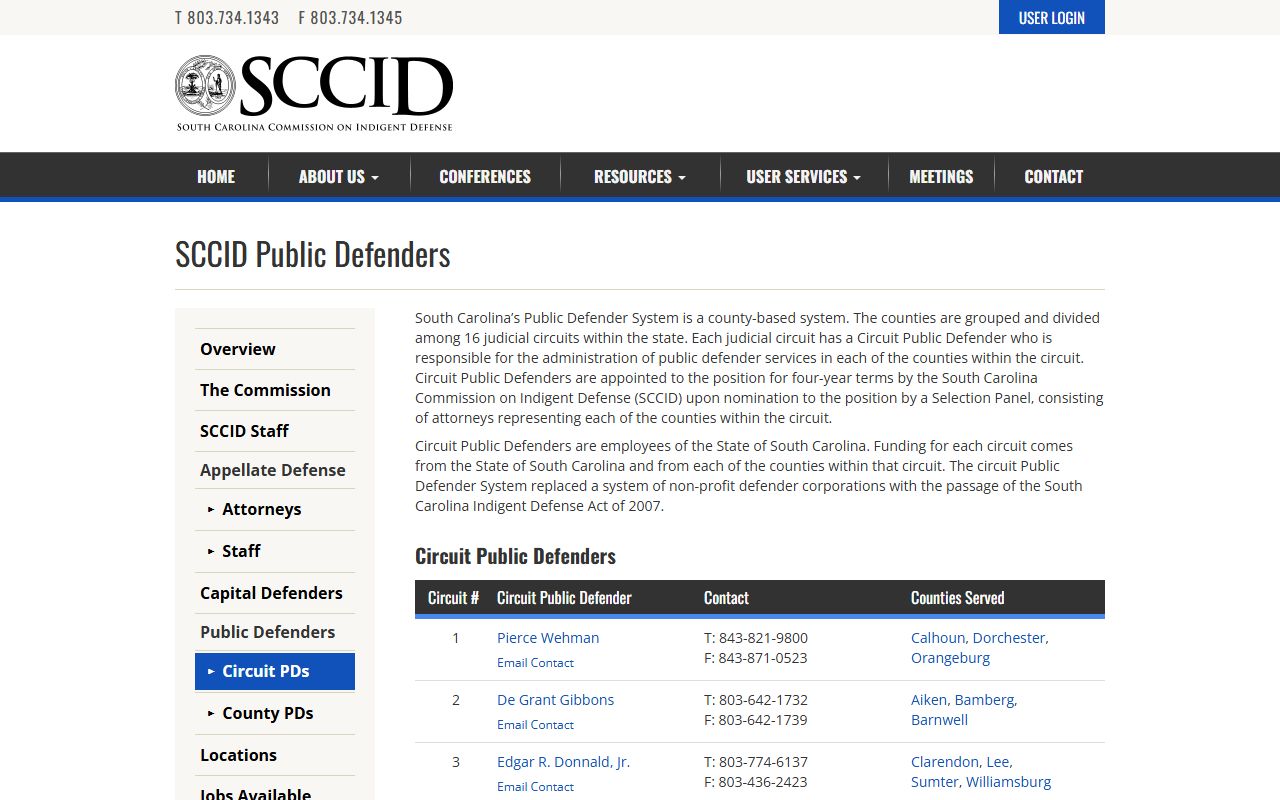
The public defender directory is not a record search tool, but it helps identify defense-contact paths for pending Hampton County criminal cases.
Hampton County Criminal Case Offices
Criminal court record questions should go to the office tied to the case stage at or near Hampton County Courthouse. The Clerk maintains the General Sessions court file. The 14th Circuit Solicitor prosecutes General Sessions cases, certain Magistrate Court misdemeanors, and criminal cases in Family Court. Sheriff Anthony "Bubba" Russell's office handles the law-enforcement side when the question is arrest, custody, or incident-report access. The Public Defender assists eligible defendants in criminal cases and does not represent people in civil matters.
Hampton County Clerk of Court
1 Courthouse Square Elm Street
Hampton, SC 29924
803-914-2250
General Sessions records, copies, certificates, and file updates after disposition.
14th Circuit Solicitor, Hampton Office
1 Elm St W.
Hampton, SC 29924
843-779-8689
Monday-Friday, 8:30 a.m.-5:00 p.m.
Hampton County Public Defender
Circuit 14
Hampton County, SC
803-914-2242
Criminal defense application contact listed by SCCID.